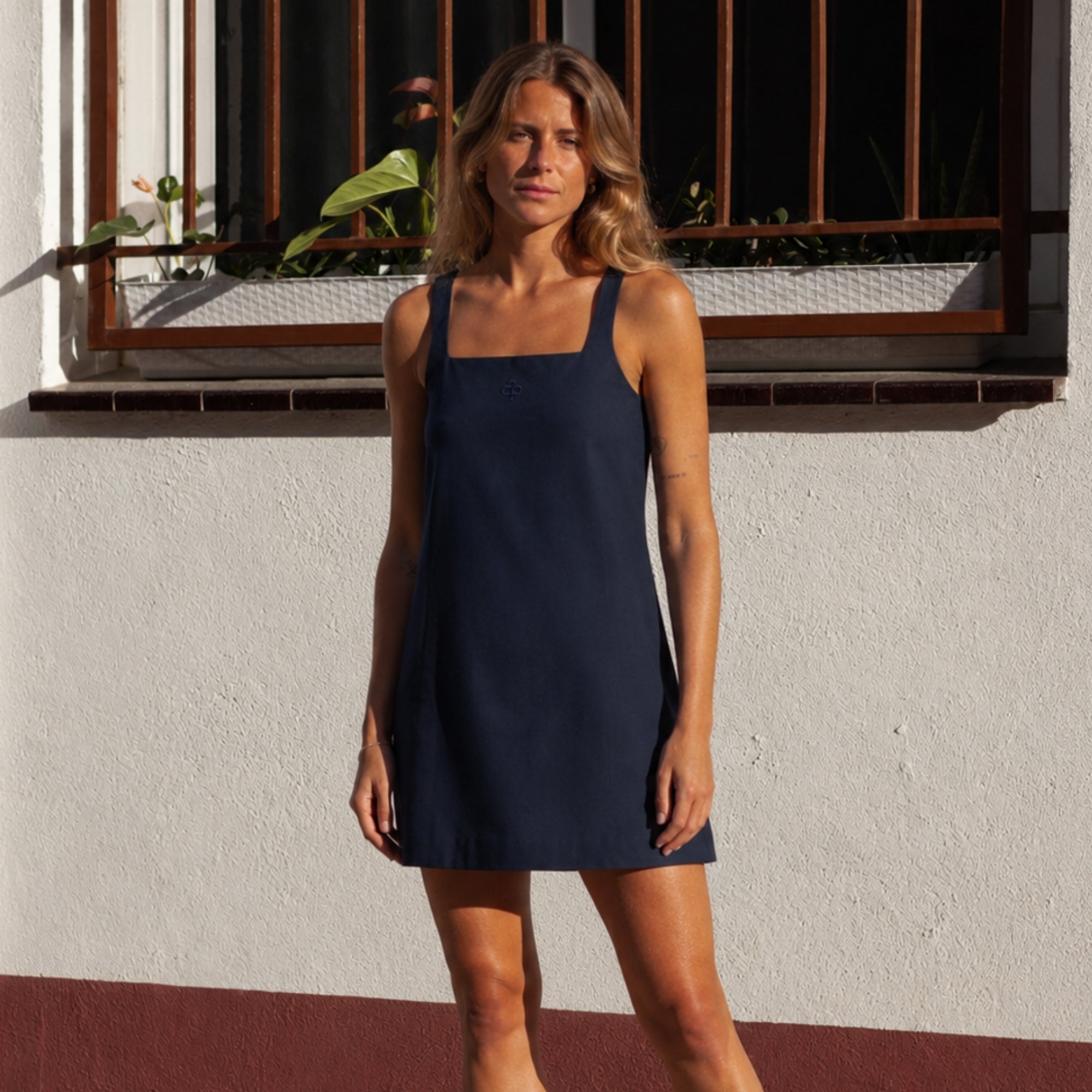
Summer 2025 Results: What Pre-Order Taught Us

We just finished our first full summer season with 526 garments made, shipped and in customers' hands across the EU. This is the retrospective we promised to write: what worked, what surprised us and what we're changing for next season.
The numbers
526 pieces total across dresses, trousers, tank tops and accessories. Dresses were the clear winner and represented our strongest category by a significant margin. Trousers came second, and tank tops filled the third slot. This tells us something important about what our customers wanted to build into their wardrobes this summer. It also tells us something humbling: we got the ranking right, but the volumes were close enough that we could have easily misjudged the split.
Navy dominated. Not by a small margin. It was the runaway colour preference across almost every piece. Second place was a distant second. Our seasonal colours moved, but not with the certainty that navy did. This taught us that colour confidence matters. People buy what feels safe first.
Size distribution surprised us. S, M, and L moved the fastest and represented the bulk of orders. But XS and XL had meaningful volume too, not niche, just smaller. There's real demand at the ends of the range, and it's worth respecting rather than rounding down.
What preorder changed about how we work
Before you can run preorder at scale, you have to understand what it actually means: you produce what people have already bought, not what you think they might buy. This is the opposite of traditional fashion. And it changes everything.
We used to make educated guesses about demand. Preorder removes the guessing. We opened orders on Monday mornings. By Friday or Saturday, we could see the pattern emerging. By Sunday night, our cutoff, we knew exactly what to make. No padding for safety stock. No hedging bets across colours or sizes. Just: people wanted this, so we're making it.
This is powerful, but it also means you can't use the traditional retailer playbook. There's no "we'll make extra just in case" or "let's run a bigger batch to get better unit pricing." You're lean by necessity. And that leanness forces you to be honest about lead times, about what "estimate" means, and about when things might go wrong.
How the weekly rhythm felt
Monday opens quietly. Orders trickle through the week. By Thursday or Friday, the batch takes shape. Saturday is usually steady. Sunday is the final push before the 23:59 cutoff. Then we close, consolidate, send manufacturing specs and begin the 12 day production estimate.
Not every week was the same. Some weeks were quiet. Other weeks were unexpectedly full, shaped by a feature, word of mouth momentum or timing we could not predict. Some weeks drove 80+ orders. Other weeks were 20 or 30. This variability is real, and we learned to sit with it. You cannot control it. You can only prepare for it.
The 12 day estimate sits in the middle of this rhythm. It's an average. Some batches we made in 10 days. Some took 14 because of fabric delays or scheduling. We printed it clearly at checkout because we needed customers to understand that this wasn't a promise, it was a realistic window based on what we'd learned. And it held up across the season.
What customers told us
The feedback was granular and honest, which is what we asked for. Two themes emerged clearly.
First: people loved the fabric quality and how the garments felt. This wasn't generic praise. People specifically commented on the weight of the cotton, the way dresses moved, the feel of our knitwear. We'd rather make fewer pieces from better materials than chase volume with mediocre fabric. Customers noticed.
Second: trousers are the most body variable garment we make. The fit feedback was consistent across multiple customers. Different bodies need different rises, different inseams, different amounts of room in the thigh. We made good trousers, but we made them to a single fit template. Some people loved them. Others found them uncomfortable. This was the clearest signal we got about what to refine.
The brand honesty resonated too. People appreciated that we were transparent about timing, about production, about what preorder actually means.
Why local production helped us deliver on this
We cut and sew in the Barcelona area and partner with Sompunt in Lleida for knitwear. This isn't sentimental. It's practical, and this season proved why.
When an order batch closes on Sunday night, our production partners know by Monday morning. They can see the colour breakdown, the size distribution, any unusual combinations. They can flag problems early, a fabric delivery running late, a dye lot issue, a production bottleneck. We didn't have to wait two weeks to discover problems. We could anticipate them.
Local production also meant we could discuss adjustments in real time. If a fabric felt different in person than in sample, we could talk about it, see it and decide together. There is less delay when everyone is within a few hours of each other. Knowing the people making our clothes, understanding their constraints and respecting their time helped us keep the 12 day estimate consistent across the season.
What we are changing for next season
Trouser fit will be our first priority. We're developing two fit templates instead of one, one for a more classic rise and fit, one for a higher rise with slightly more room through the thigh. This won't solve every body type, but it will acknowledge that fit isn't one size fits all.
Preorder communication at checkout needs refinement too. We're being more explicit about what the 12 day window means, what happens if someone changes their mind, and how to size before ordering. Some customers guessed at sizes and got it wrong. We can help more with better guidance upfront.
We're also holding a very small amount of controlled stock, not for every item, but for bestsellers. Navy dresses and core tank tops. A modest safety stock that can cover size exchanges if someone finds the fit isn't right. This keeps the preorder model intact while acknowledging that people need options when they can't try things on.
This summer taught us that preorder is not just a business model. It is a relationship. People trust us to make what they ordered, to do it well and to be clear about the tradeoffs. You can read more about our preorder method, explore our transparency page, or dive into how preorder works at Pamuuc.
The clearest product lessons came through pieces like the Linen Midi Dress and Straight Leg Linen Pants, where fabric confidence and fit feedback shaped what we refine next.